
Tea Traditions in Uzbekistan: More Than Just a Drink
Chaykhana, hospitality and rituals in the heart of the Silk Road
In Uzbekistan, tea is not just a hot drink – it is a language of hospitality, a way of welcoming people, sealing agreements and spending unhurried time with family. From traditional homes to lively chaykhanas (tea houses), tea is present at every important moment of daily life.
Whether you are in Tashkent, among the madrasas of Samarkand or in the quiet courtyards of Bukhara, you will always find a steaming teapot ready to accompany the conversation. In this article we explain how Uzbek tea is prepared, how it is served and what it means in the culture of the Silk Road.
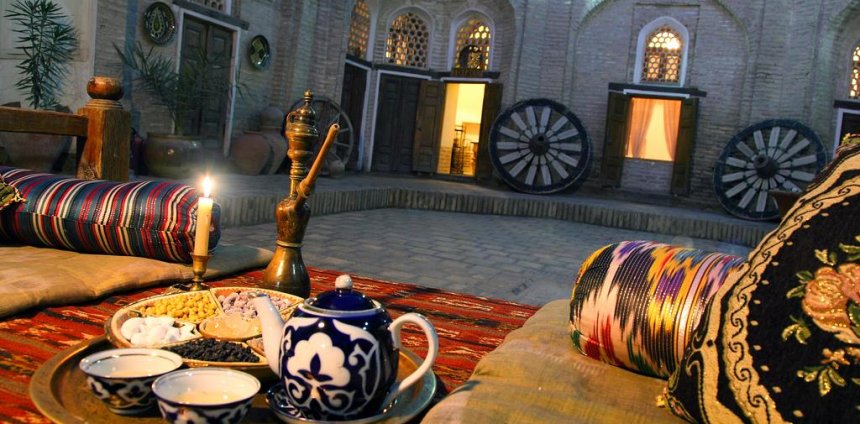
🫖 Tea at the Heart of Uzbek Hospitality
In the culture of Uzbekistan, offering tea is the ultimate gesture of courtesy. When you enter a house, a mahalla (traditional neighbourhood) or a chaykhana, the first thing that appears on the table is a hot teapot. Before talking about business, family or travel, people share tea together.
Tea opens the door to conversation and symbolises peace, respect and trust. For Uzbeks, refusing a cup without a good reason is almost like refusing an embrace. That is why, during a trip along the Silk Road in Uzbekistan, the most important moments are not only about monuments, but also these simple pauses around a small piyala (handleless bowl).
🍃 Types of Tea and Life in the Chaykhana
Green tea (kuk choy) is the main star in almost the whole country, especially in rural areas and in historic cities such as Bukhara and Khiva. In contrast, in Tashkent, black tea (qora choy) is very popular, sometimes served with lemon.
There is also shirchoy, tea with milk, which in many homes is almost a full breakfast dish. It may include butter, salt or mild spices, and is eaten together with freshly baked non bread from the tandoor.
Chaykhanas (tea houses) are essential meeting points. Men and women gather to talk about the harvest, the neighbourhood, football or politics; they play cards, cook plov and share stories. For travellers, sitting in a chaykhana is the best way to observe real life in Uzbekistan, far beyond the main monuments.
🔥 Hot Tea Even in Summer: Desert Wisdom
One of the questions travellers ask most often is: “How can they drink hot tea when it’s 40 degrees outside?”. However, for Uzbeks, drinking hot tea in the middle of summer is natural and logical.
In dry, extreme climates, very cold drinks only refresh you for a few minutes and can be heavy on the stomach. Hot tea, on the other hand, stimulates sweating and helps regulate body temperature, helping to prevent heat stroke. It is a custom inherited from centuries of life in deserts, caravan routes and intense summers.
“Drinking hot tea in summer is not madness – it is the wisdom of the desert and the Silk Road.”
So when you travel through Uzbekistan, do not be surprised if you are offered steaming tea after a long day of excursions: your body will appreciate it more than you think.
🧉 How to Prepare Real Uzbek Tea Step by Step
Each region has its own nuances, but the foundation of Uzbek tea preparation is always the same: respect for aroma and temperature. A common mistake is letting the tea boil directly; in Uzbekistan this is avoided in order to preserve the delicate colour and flavour of the leaves.
- 1. Rinse the teapot with boiling water to warm it and fix the aroma.
- 2. Add roughly one teaspoon of tea leaves for every half litre of water.
- 3. Pour a small amount of hot water, close the teapot and let it rest for 2–3 minutes.
- 4. Fill the teapot with more boiling water and close it again.
- 5. Cover the teapot with a cloth to keep the infusion hot.
- 6. After about 5 minutes the tea is ready: aromatic, light and golden in colour.
⚠️ Tip: do not let the tea boil directly on the fire, otherwise it becomes bitter and loses much of its aroma. The secret of authentic Uzbek tea lies in patience and in controlling the temperature of the hot water.
🤲 Serving Ritual: Respect, Hierarchy and “Kaytarma”
Serving tea correctly is an art full of symbolism and respect. Before offering it to guests, the host performs what is called “kaytarma”: he pours tea into a bowl (piyala) and returns it to the teapot three times. This improves the blend, “wakes up” the flavour and shows attention to detail.
Afterwards, a small amount – about one third of the bowl – is served to the oldest or most honoured guest. It is offered with the right hand placed over the heart and a slight bow of the head, accompanied by a respectful “oling” (“please, take it”).
Traditionally at home, the youngest woman in the family (often the kelin, the daughter-in-law) serves tea when there are guests, following the order of respect: first the elders, then everyone else. In all-male gatherings, the hostess hands the teapot to the head of the household, who then serves his guests.
🥮 What Uzbek Tea Is Served With
On an Uzbek table you will rarely see tea alone. The teapot almost always comes with sweets, fruit and small snacks that invite you to stay and talk a little longer:
- Dried fruits and nuts: raisins, dried apricots, almonds or pistachios.
- Traditional sweets: parvarda candies, halva, homemade cookies.
- Non bread: the round bread baked in a tandoor oven, symbol of abundance.
- Light savoury dishes: fresh salads or small portions of plov during longer gatherings.
This combination turns tea into a complete sensory experience, where flavour, aroma and conversation blend together. To truly understand the customs and traditions of Uzbekistan, you need to sit at least once at a family tea table.
🌟 Living the Tea Tradition During Your Trip
If you are planning a trip to Uzbekistan, make sure you leave time in your itinerary not only for the classic list of “must-see sights”, but also to sit unhurried in a chaykhana, watch the rhythm of the neighbourhood and accept every cup of tea you are offered.
It might be on a terrace overlooking Registan Square, in a hidden courtyard in Khiva or under the trees by Lyabi-Hauz in Bukhara. These are the moments when you discover the true essence of Uzbek hospitality and the Silk Road: sharing, listening to stories and feeling like a welcomed guest rather than just a tourist.
If you dream of tasting authentic Uzbek tea in a local home or in a historic chaykhana,
The Silk Road Travel can design a tailor-made itinerary for you.
Tell us your ideas in the contact section
and we will help you experience Uzbekistan cup by cup.