
Gastronomic tourism in Uzbekistan
Exploring Uzbekistan means taking a seat at a table set with centuries of history. Food here is hospitality, identity, and local pride. Each region has a star recipe: the plov of Samarkand, tandoor-baked samsa in Bukhara, traditional sweets in the historic bazaars of Khiva and tea shared in every home. Gastronomic tourism in Uzbekistan is not only tasting dishes: it is understanding Silk Road culture through its flavours.
🍽️ Traditional Uzbek food
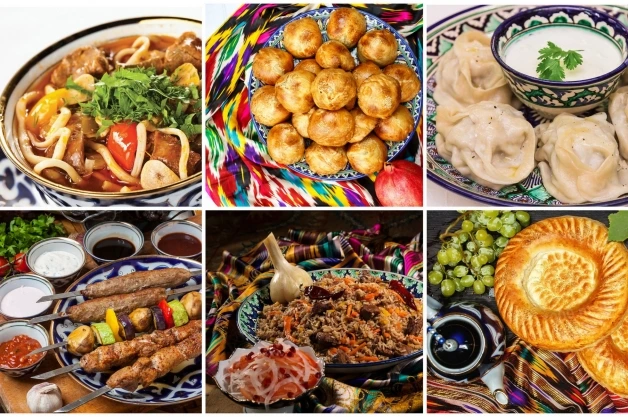
Uzbek cuisine is among the richest in Central Asia and a key part of cultural tourism in Uzbekistan. Recipes use local ingredients—lamb, yellow carrots, mild spices, fresh herbs—cooked with techniques handed down for generations in caravanserais and family homes.
The national dish is plov (or “osh”): aromatic rice with meat, carrot and onion, sometimes chickpeas, raisins or quail eggs. Every city defends its own style: the plov of Samarkand differs from Tashkent, and travellers on trips to Uzbekistan often devote an entire meal to comparing them.
Other icons of traditional cuisine:
- Lagman: noodle soup or stir-fry with vegetables and meat. A clear legacy of exchanges along the Silk Road.
- Samsa: pies baked in a clay tandoor, usually filled with meat, onion or pumpkin. Very typical in Bukhara.
- Shashlik: charcoal-grilled skewers, served with raw onion and hot bread. A bazaar and street-food favourite.
- Manti, chuchvara and khonum: different dumpling styles (steamed or in broth), clear evidence of historic ties between Central Asia, Persia and the Turkic world.
- Traditional breads (non, patyr, katlama): tandoor-baked and stamped with carved seals. Bread is sacred in Uzbek culture: never thrown away, never placed upside down.
- Desserts & sweets: sumalak (slow-cooked sprouted-wheat cream), chak-chak (fried dough with honey), halva and nisholda (thick, aromatic meringue).
- Traditional drinks: green tea, ayran (salted yogurt), fruit sharbat.
Eating in Uzbekistan also means sharing a table. Hospitality is central to identity: in a local home or rural guesthouse, expect a dastarkhan laden with fruit, nuts, hot breads and homemade dishes—an essential experience on any organised trip to Uzbekistan.
🍷 Wine tourism
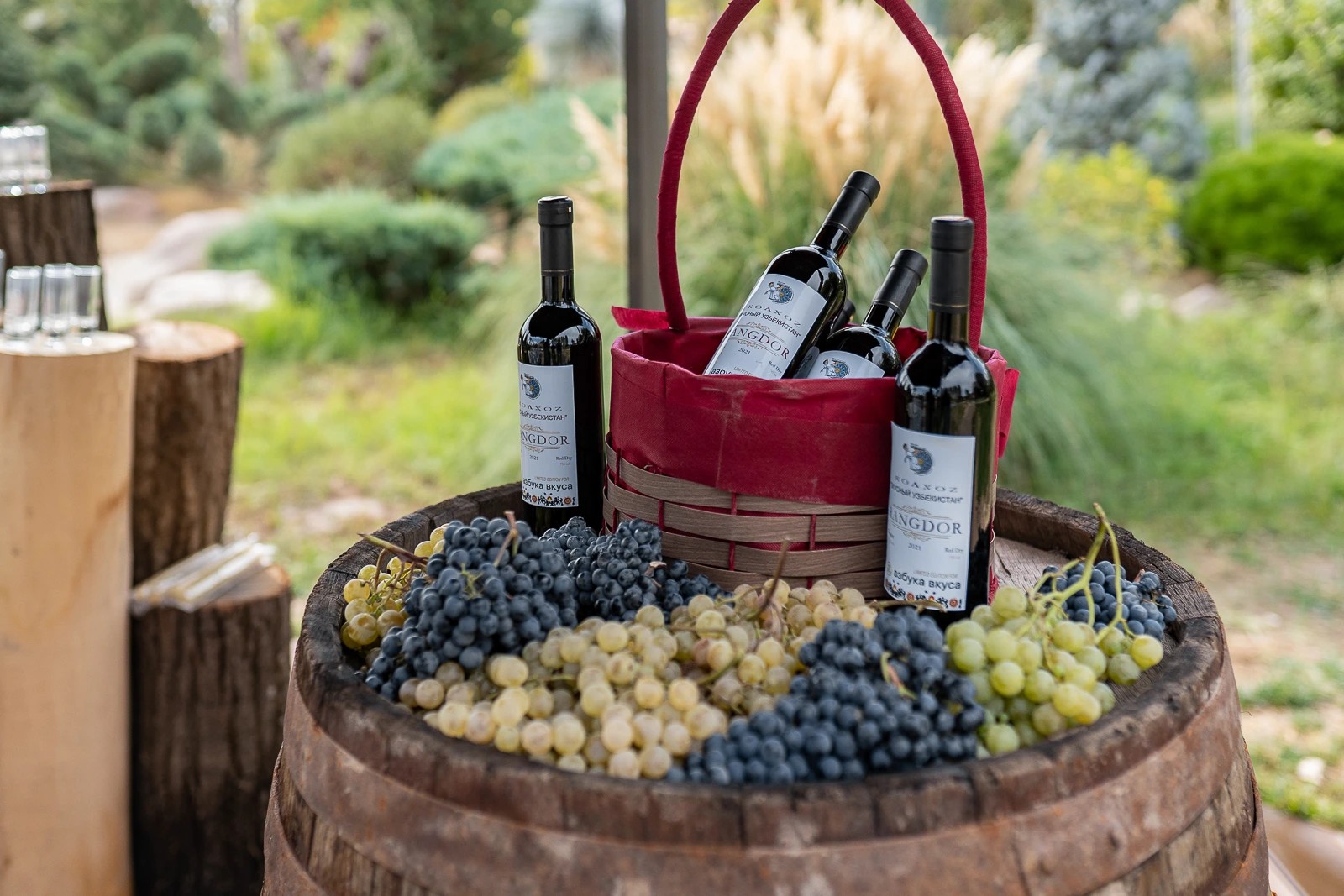
Few know that Uzbekistan has centuries-old wine traditions. Around Samarkand you’ll find local wines from native varieties like Shirin or Gulyakandoz, with historic cellars offering guided tastings.
A classic stop on many organised trips to Uzbekistan is the Khovrenko winery, mixing Soviet-era history, local production and professional tastings—a different way to understand Samarkand beyond Timurid architecture.
In Bukhara, family-run wine routes are opening to food travellers, blending artisanal wine, traditional grape growing and local cuisine served in historic courtyard houses.
This enotourism in Uzbekistan offers two clear advantages: you enjoy a local product little known outside Central Asia, while supporting regional economies committed to sustainable, high-quality tourism.
☕ Tea culture & hospitality
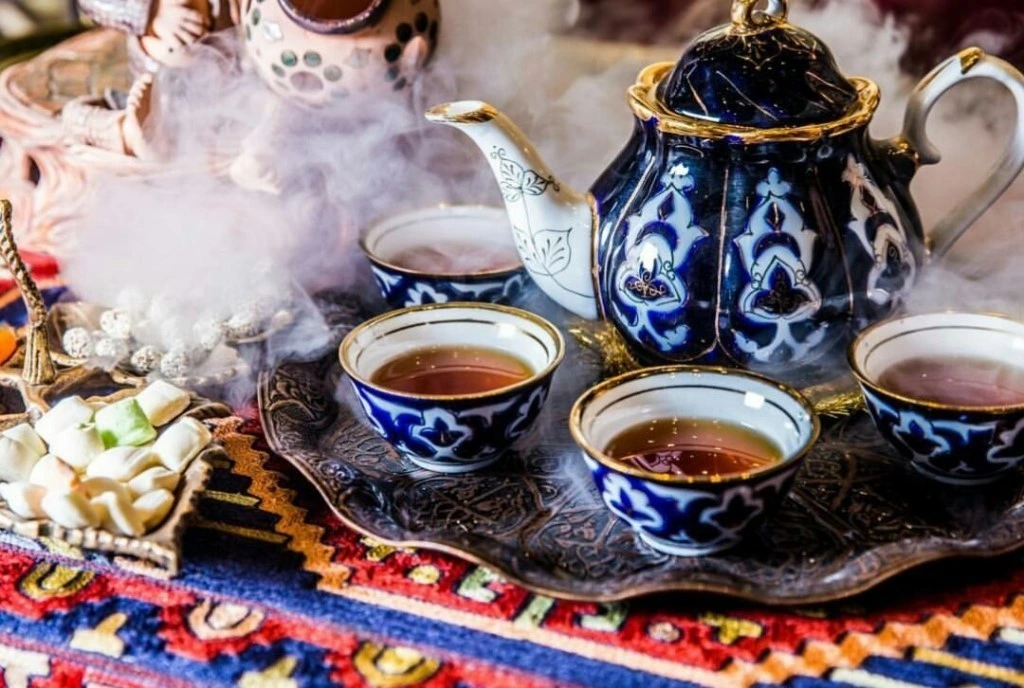
In Uzbekistan, tea is more than a hot drink. It is a welcome. It’s the first thing you’re offered in a traditional home, a rural guesthouse or even in an artisan’s workshop.
Green tea is served in pialas (small handleless cups) with nuts, dried apricots, raisins, pistachios and sweets such as halva or chak-chak. In the historic cities of Bukhara and Khiva, many traditional teahouses preserve old atmospheres of carpets, painted ceramics and unhurried conversation.
For travellers, sipping tea under a mulberry tree in an adobe courtyard can be as memorable as seeing Registan Square in Samarkand—the moment when the country stops being “a destination” and starts feeling close.
This tea culture is deeply tied to Uzbek hospitality: opening the table and sharing. That’s why gastronomic tourism in Uzbekistan isn’t only tasting flavours; it’s being welcomed as a guest.
💡 Conclusion
Gastronomic tourism in Uzbekistan is far more than eating well. It’s understanding daily life: how families gather, how recipes travelled the Silk Road, and how each city proudly protects its way of cooking plov.
Tearing hot bread from a tandoor, sitting in a courtyard in Bukhara, tasting local wine in Samarkand or sharing tea in Khiva is a direct way to touch the country’s identity.
🍲 Uzbekistan welcomes you with an open table—every flavour is a living story.