
🌟 Samarkand: the historic jewel of the Silk Road
Samarkand is one of the most legendary cities in Uzbekistan. It was the capital of Amir Timur’s (Tamerlane’s) empire, a caravan crossroads and a scientific centre in the medieval period. Today it combines monumental Islamic architecture, UNESCO World Heritage sites and vibrant local life. It is an essential stop on any cultural trip through Central Asia together with Tashkent and Bukhara.
⏳ History and origins of Samarkand
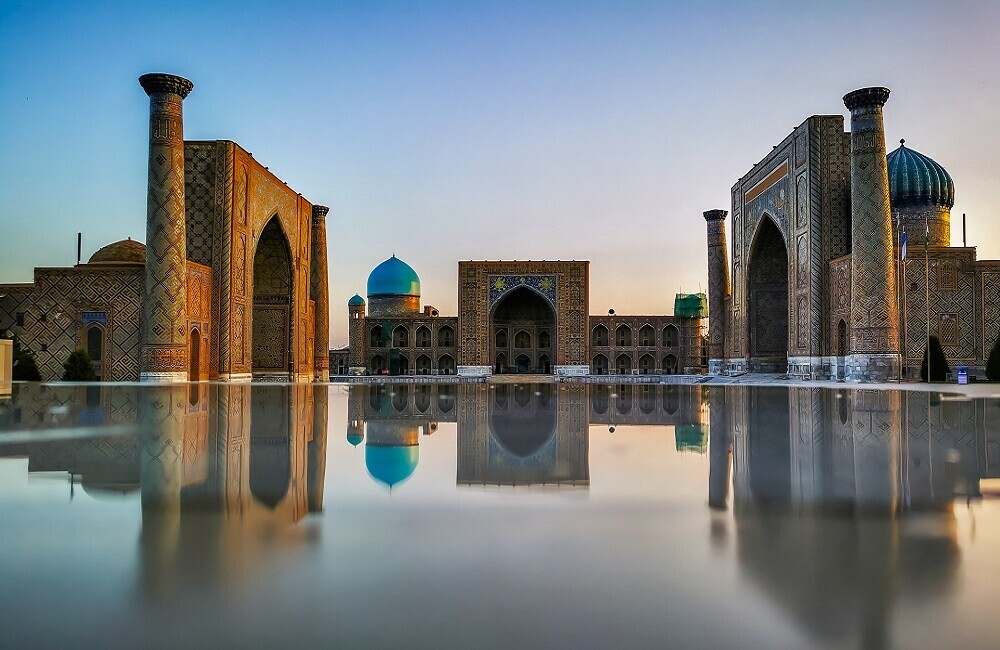
Samarkand has more than 2,700 years of documented history. It is mentioned as Afrosiab in ancient chronicles and was a strategic point on the Silk Road, where caravans from China, Persia and the Mediterranean exchanged silk, spices, metals and scientific knowledge.
Under Amir Timur (Tamerlane) in the 14th century, Samarkand became an imperial capital. Madrasas, mausoleums and monumental mosques were built to showcase the political and cultural power of the Timurid empire.
Timur’s grandson, Ulugh Beg, turned the city into a centre of astronomy and mathematics. His observatory was one of the most advanced in the medieval Islamic world.
Today, Samarkand is a key destination for cultural tourism in Uzbekistan, together with historic cities such as Bukhara and Khiva. It is a UNESCO World Heritage site and one of the main reasons many travellers decide to visit Uzbekistan.
🏛️ What to see in Samarkand
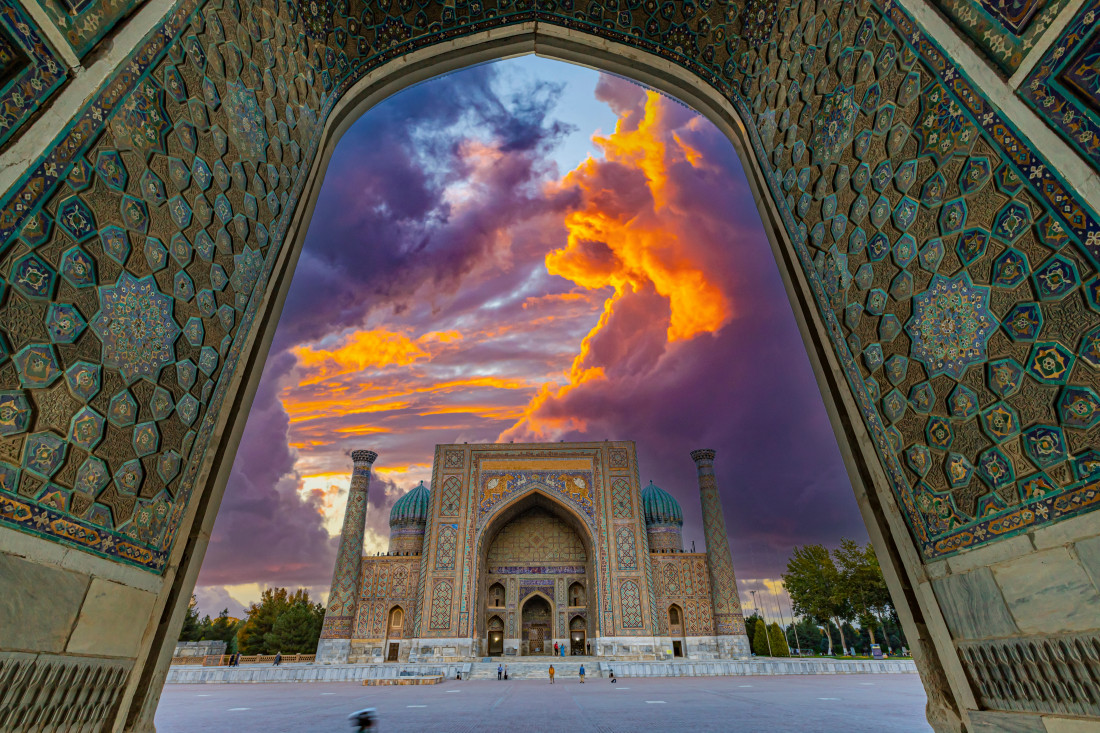
Most travellers who come to Samarkand dream of seeing the Registan, but the city offers much more: royal necropolises, legendary mosques, traditional workshops and lively neighbourhoods.
Key places you can’t miss:
- Registan Square – Complex of three madrasas: Ulugh Beg, Sher-Dor and Tilla-Kari. It is the visual icon of Samarkand and one of the most spectacular Islamic architectural ensembles in the world.
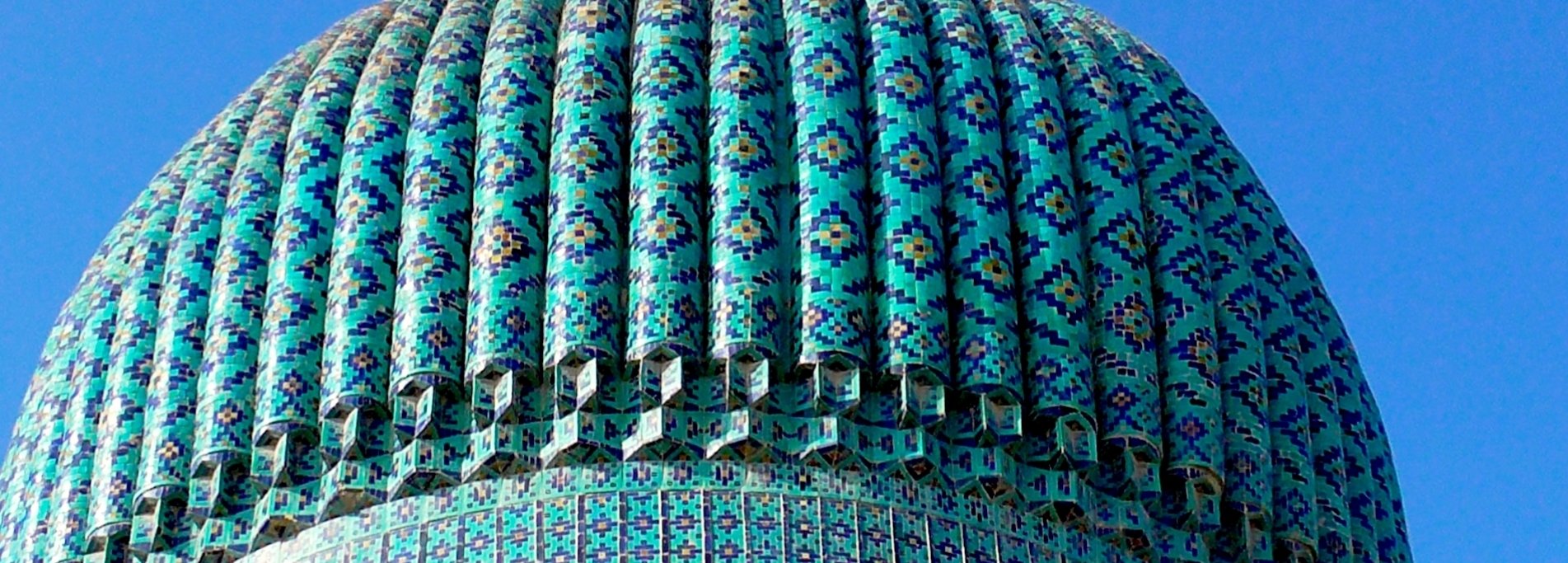
- Gur-e Amir Mausoleum – Tomb of Amir Timur (Tamerlane) and the Timurid dynasty. A hypnotic blue dome, dark marble and political power turned into art.
- Shah-i Zinda – Monumental necropolis with intensely decorated blue and turquoise mausoleums. It is one of the most moving spiritual sites in Uzbekistan.
- Bibi-Khanum Mosque – Built by order of Tamerlane. Its scale is so huge that in its time it seemed almost impossible to build something like it without divine help.
- Siab Bazaar – Historic market where local life is still very much alive: round bread (non), dried fruits, spices, nuts and oriental sweets.
- Afrosiab ruins – Archaeological area showing the city’s pre-Islamic past. Ideal if you are interested in the oldest Samarkand.
- Ulugh Beg Observatory – Remnant of the scientific centre that studied the sky centuries before Renaissance observatories in Europe.
This historic and monumental side makes Samarkand a must-see stop for cultural tourism in Uzbekistan. For many travellers, walking through the Registan at night when it is lit up is one of the most memorable moments of the whole trip.
🍽️ Gastronomy of Samarkand

Eating in Samarkand is an essential part of the trip. Here you can try one of the most famous versions of plov in Uzbekistan: rice, carrot and meat are cooked in layers without stirring so each ingredient keeps its own texture.
Other must-tries include: the round Samarkand bread (baked in a clay tandoor oven and almost impossible to replicate outside the city), samsa stuffed with meat or lamb, lagman (noodles with vegetables and meat) and oriental sweets made with nuts and honey.
For travellers interested in food tourism, the Siab bazaar is a key stop: spices, dried fruits, figs, dried apricots, almonds, pistachios and artisanal halva.
If you want to understand local life, sit down in a traditional chaikhana, order green tea and simply watch the everyday rhythm: families, merchants and quiet conversations.
🛍️ Crafts and authentic souvenirs

Samarkand is famous for its mulberry paper, a revived craft tradition you can see in local workshops. These papers are handmade following techniques that go back to medieval times.
You will also find glazed ceramics, miniatures inspired by ancient manuscripts, embroidery and traditional fabrics. Buying local crafts supports families who continue historic trades and keeps alive heritage that is part of the cultural identity of Uzbekistan.
Practical tip: in traditional markets it is normal to bargain, but always with respect and good humour.
🌤️ Climate and travel tips
Samarkand has very hot summers and mild spring and autumn. Many travellers consider April–May and September–October the best times to visit.
Useful tips:
- Bring water, a cap/hat and sunglasses for outdoor visits. Many sites are completely open-air.
- In religious complexes and mausoleums, dress respectfully (shoulders and legs covered).
- Try to visit the Registan at night as well: the lighting highlights blues and golds and the atmosphere is very special.
- Getting to Samarkand is easy from Tashkent and Bukhara by Afrosiyob high-speed train. Perfect if you are doing a classic route through Uzbekistan.
In short: Samarkand is not just an open-air museum. It is a living city, proud of its Timurid past and connected to the present. For many English-speaking travellers, it is the main reason to plan a cultural trip to Uzbekistan.
💡 Samarkand in one sentence
Every blue mosaic, every golden dome and every bazaar in Samarkand still tells the story of the Silk Road.
Visiting Samarkand means walking inside a living book of Islamic history, medieval science and timeless art.