
Muynak (Moynaq) — The city where the sea disappeared
Muynak, in Karakalpakstan (north-west Uzbekistan), was once a thriving fishing port on the Aral Sea. Today the water has retreated tens of kilometres and in its place lies the Aralkum desert: a shocking landscape that turned Muynak into a global symbol of the ecological crisis.
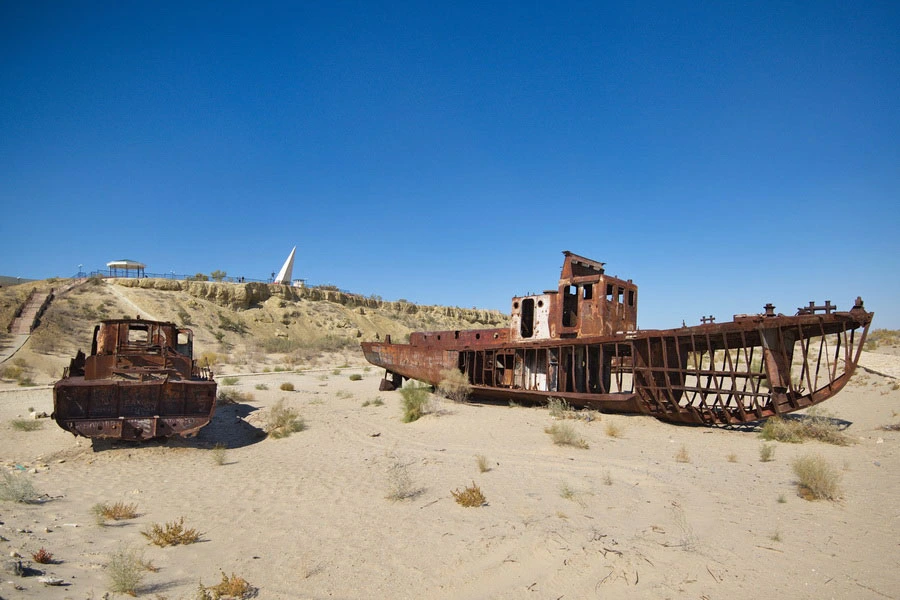
The most famous image is the ship cemetery, rusting hulls resting on sand. Visiting Muynak means looking recent Central Asian history straight in the eye and practising responsible tourism: getting informed, respecting the environment and supporting the local community, usually travelling from Nukus. If you are travelling independently across Uzbekistan from Tashkent, Samarkand, Bukhara or Khiva, Muynak offers a unique perspective beyond the classic Silk Road route.
1.From sea to desert: Aralkum
In the 1950s–60s Muynak was a busy fishing port with canning factories, nautical schools and a strong maritime culture. The diversion of the Amu Darya and Syr Darya rivers for irrigation caused the Aral Sea to retreat tens of kilometres. The empty basin left by the water turned into the Aralkum desert, with salty dust and shells scattered across what used to be seabed.
The result is an overwhelming landscape that helps you understand why Muynak is now a place of remembrance: an “end of the sea” that invites reflection on water usage, intensive agriculture and the balance of ecosystems in Central Asia.
2.What to see in Muynak
- Ship cemetery: a row of rusting boats stranded on sand. It is Muynak’s iconic image and a direct testimony of the sea’s retreat.
- Muynak Aral Sea Museum: panels, historical photos and local testimonies explaining the fishing boom, the crisis and current projects.
- Aralkum viewpoints: elevated spots overlooking the former seabed, with dunes, crystallised salts and tracks of 4x4 vehicles.
- Memorials and murals: in squares and streets you will see works dedicated to sea people and to the community’s resilience.
- Excursions towards the Ustyurt edge: with a guide and suitable vehicle, it is possible to approach the Ustyurt cliffs and contemplate the vastness of Aralkum.
Tip: combine the visit with Nukus to rest and, if you are into art, to explore its cultural scene. Most tours to Muynak start from there.
3.Responsible tourism and basic rules
This is a sensitive place. For responsible tourism in Muynak:
- Do not climb on the boats or remove parts: they are heritage and also dangerous (rust, sharp edges).
- Leave no trace: take your rubbish with you and avoid driving off-road outside marked tracks.
- Support the local economy: hire guides from Muynak/Nukus, eat in local businesses and buy local crafts.
- On windy days, consider a mask or scarf because of salty dust.
- Respect signs and advice: some areas may be restricted for safety reasons.
4.How to get there and when to go
The usual base is Nukus, capital of Karakalpakstan. The drive is around 3–4 hours to Muynak. The most comfortable option is to travel with a private car and driver or with a local agency.
Recommended seasons: spring and autumn, when temperatures are milder. In summer it can be very hot and in winter extremely cold. Bring water, sunscreen, a hat or cap and wind-resistant clothing.
If you plan to venture onto tracks towards the former Aral shore or the Ustyurt plateau, always check with local guides about road conditions, fuel and mobile coverage. For logistical questions or to arrange a customised tour, you can write to us via the contact page.